
When Memory Becomes the Monument:
Facing the Silence of Treblinka
This is my last post about our family’s heritage trip to Poland, written now from the comfort of home in Toronto. Looking back, I realize that no photo, no video, could ever capture the weight of what we experienced there; our final day brought everything together in a way that was both profoundly emotional and deeply philosophical. When travelers plan a heritage trip to Poland, everyone naturally goes to Auschwitz, and many make the journey to Majdanek.
Because Treblinka was completely burnt to the ground by the Nazis in a desperate attempt to hide their crimes, it can sometimes feel as though it slips into the background of mainstream history. Yet, it holds a staggering, vital significance for Jewish history. It was a pure extermination camp, designed solely for death, and it is where an estimated 800,000 Jews were murdered. It is believed that my great-grandmother and her grandchildren were murdered there.

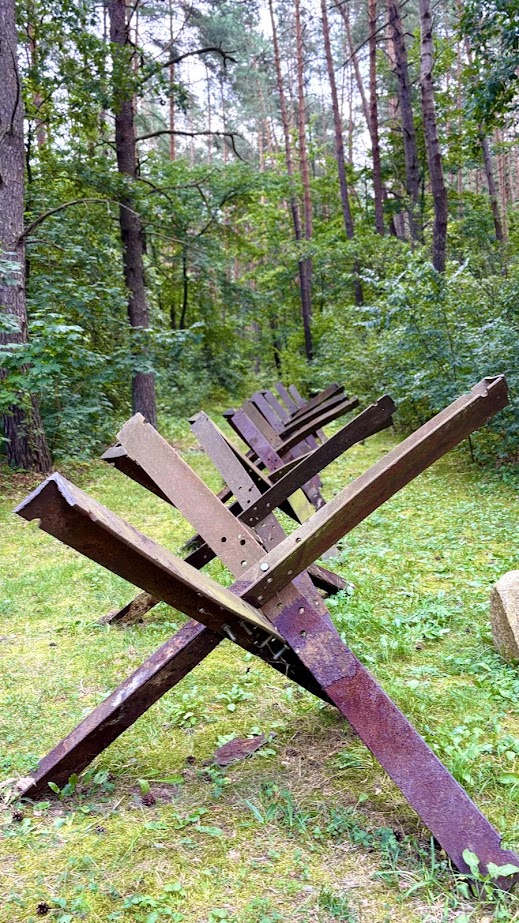
Having visited Auschwitz only days before, I mistakenly thought I might be more prepared for Treblinka. I wasn’t. Auschwitz is a massive, industrialized complex of brick barracks and barbed wire, where the physical remnants of the atrocity are tangible. Treblinka, however, is an entirely different experience of grief, elevated into an extraordinary piece of architectural and sculptural brilliance.
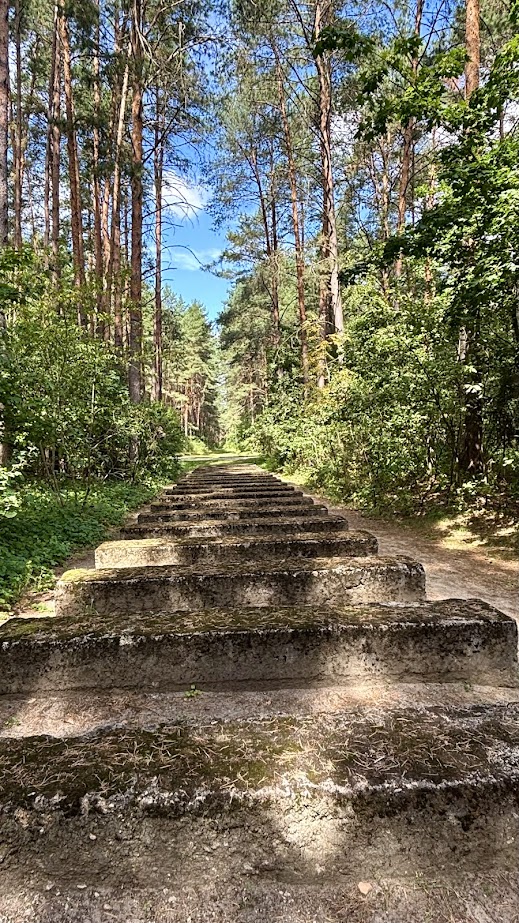
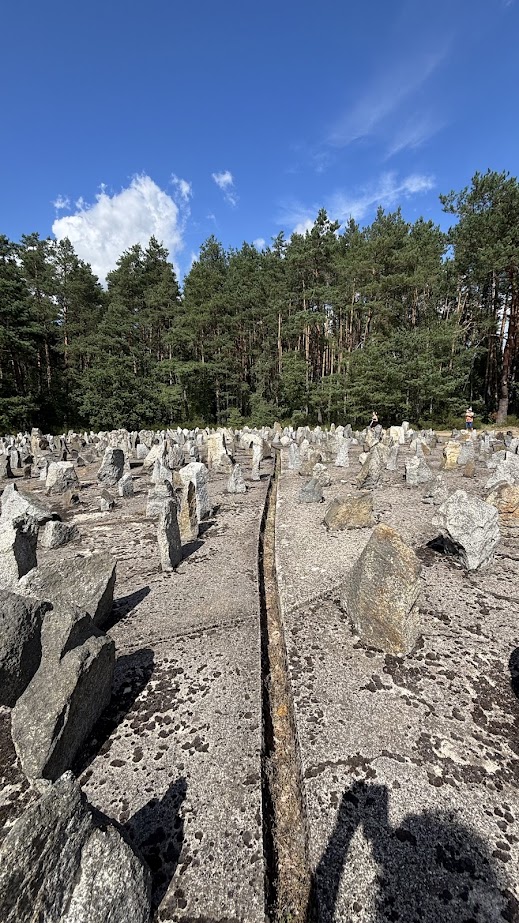
The master Polish designers Franciszek Duszeńko and Adam Haupt constructed a landscape made entirely of abstract symbolism. They turned the terrain itself into a monument. As you enter, you walk along heavy concrete sleepers that look like railroad tracks, tracing the exact route the trains took. The cobblestone paths leading from the ramp mimic the layout of the destroyed Jewish shtetls, forcing you to literally retrace the final steps of the victims to the gas chambers.

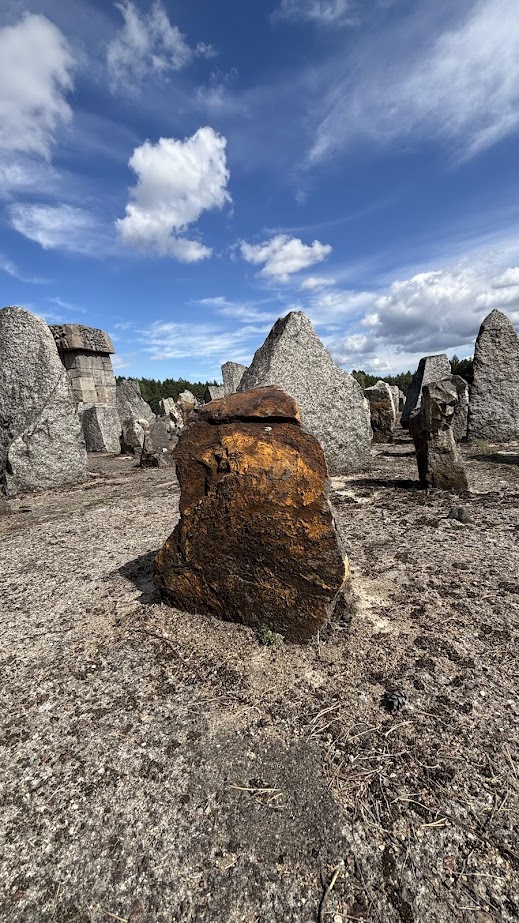

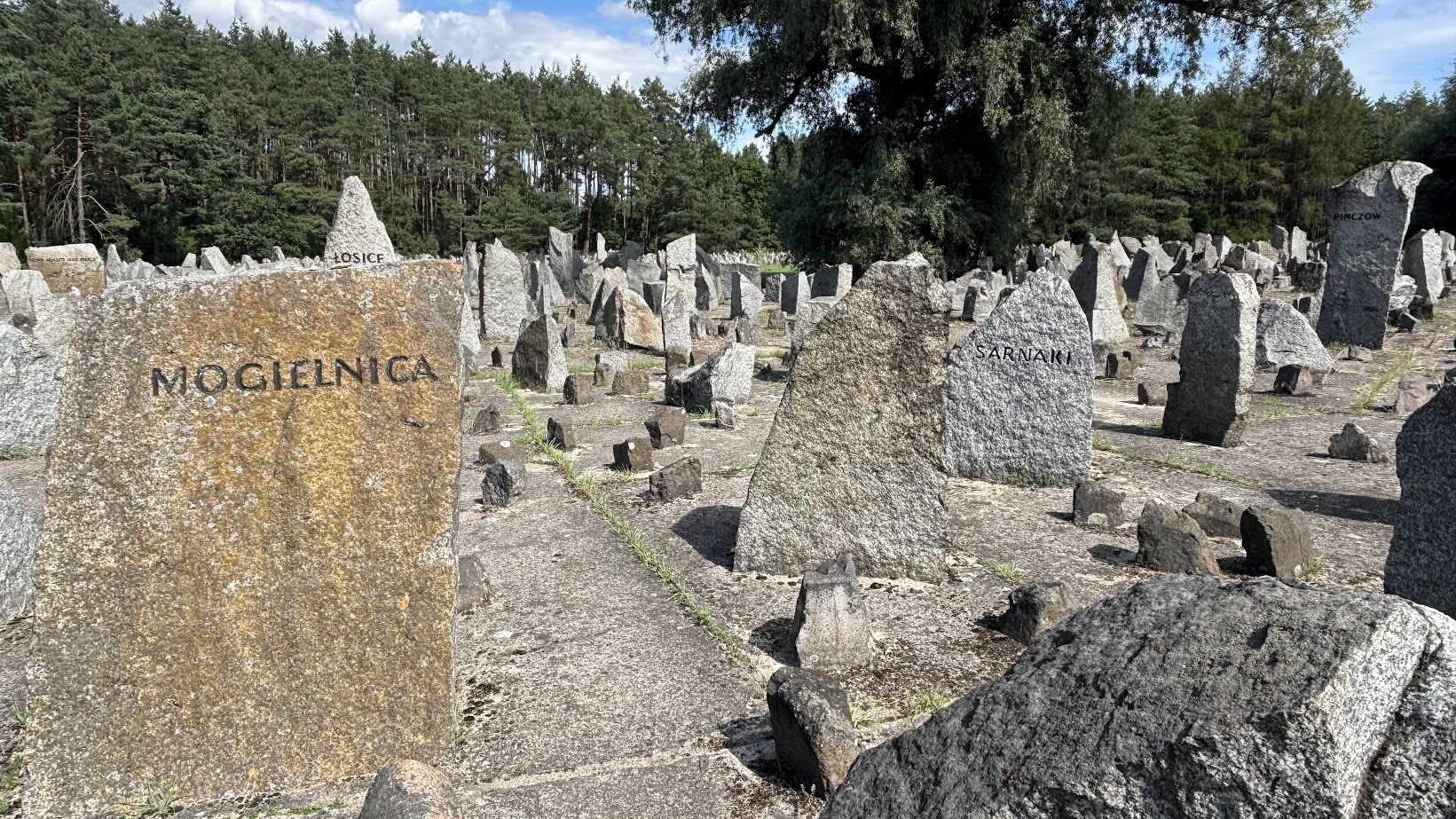
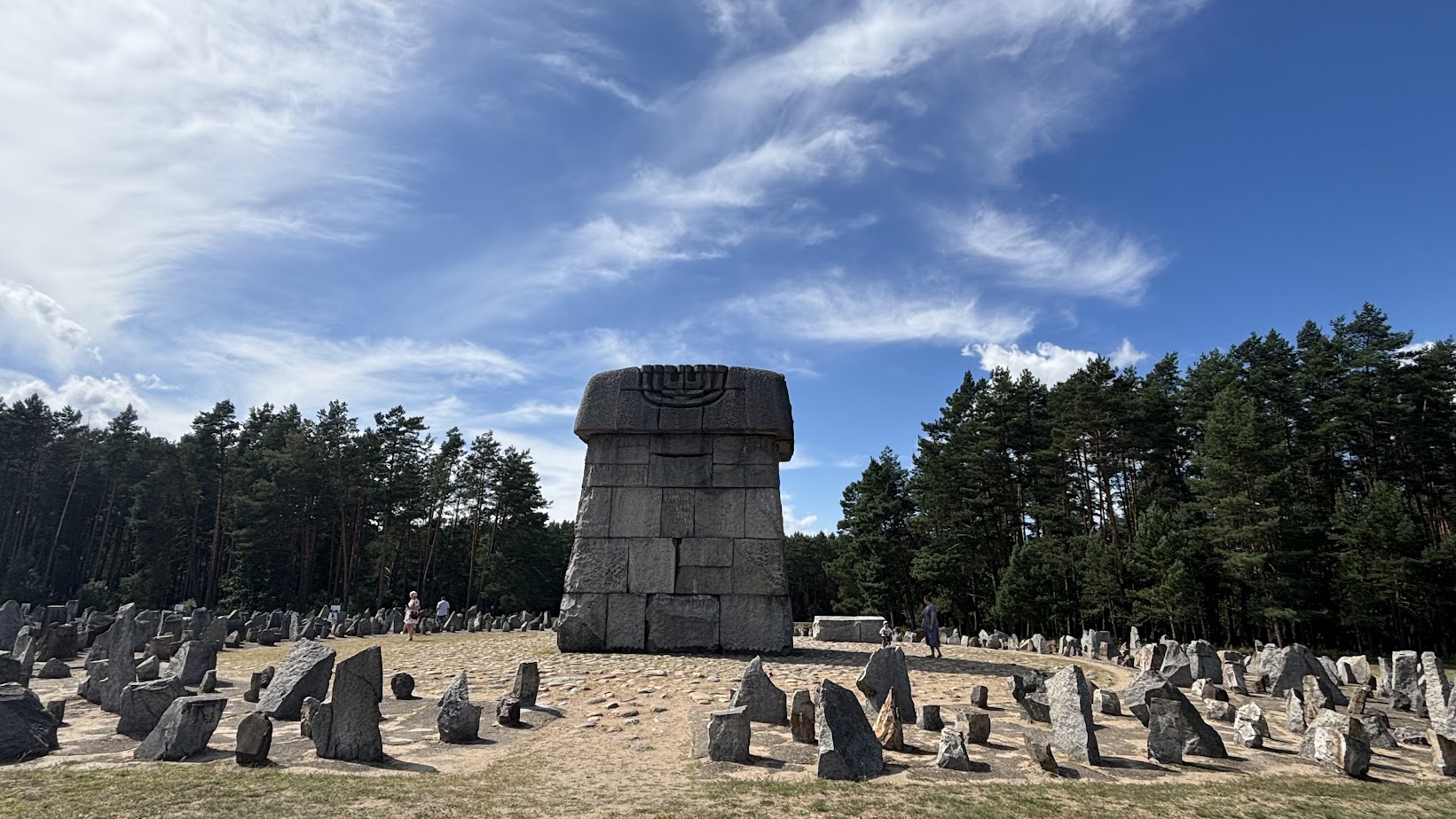
The centerpiece of this architecture is a massive, eight-meter-tall monument of unhewn granite blocks, purposefully designed to evoke the Western Wall in Jerusalem. A deep, jagged fissure splits down the front face like a crack in the soul of humanity, capped at the top with haunting reliefs of weeping human figures, blessing hands, and a hidden menorah. Behind it, a sunken concrete plate covered in blackened, jagged basalt “icicles” represents the open pyres where bodies were burned. Surrounding this central monument is a vast ocean of 17,000 jagged, irregular stones cutting out of the earth, symbolizing the number of people slaughtered here in a single day.
Each stone is carved with the name of a town or a village, standing as a silent, permanent sentinel for the entire families and vibrant communities that were completely wiped off the map. Walking among them, you realize that history is not just a collection of dates, but a gathering of names, each representing a story cut short.

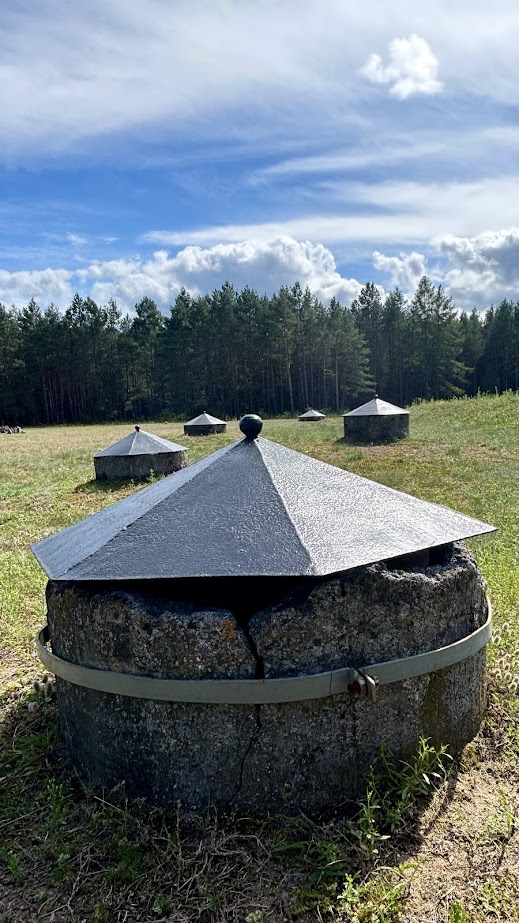

At one point, we stood across from the central monument, marked with the words “Never Again,” while a group of young Israelis listened to their guide nearby. Watching them in that quiet forest was a powerful reminder that remembrance is not a passive act of looking backward, but an active, artistic, and moral responsibility we all share to ensure that the void left by these erased lives is never forgotten.

This entire trip was intense, meaningful, and unforgettable in every way. We didn’t just walk through the shadows of the past; we also fully immersed ourselves in modern Polish culture. We laughed together over incredible meals, explored vibrant cities, and discovered a stunningly beautiful country.
There is a beautiful philosophy in balancing that joy with the sorrow of our history. We carried our past with us, and we shared it as a family, proving that the ultimate defiance against destruction is to live fully, together, in the places our ancestors once called home. For that connection, and for that journey, I am profoundly grateful.
Join us on this curated Poland adventure, enjoy our short film:
“Some lessons are best served neat.”
—Nurit